Reformer Pilates Benefits Beyond Flexibility: Why Sydney’s Elite Are Ditching Traditional Gyms
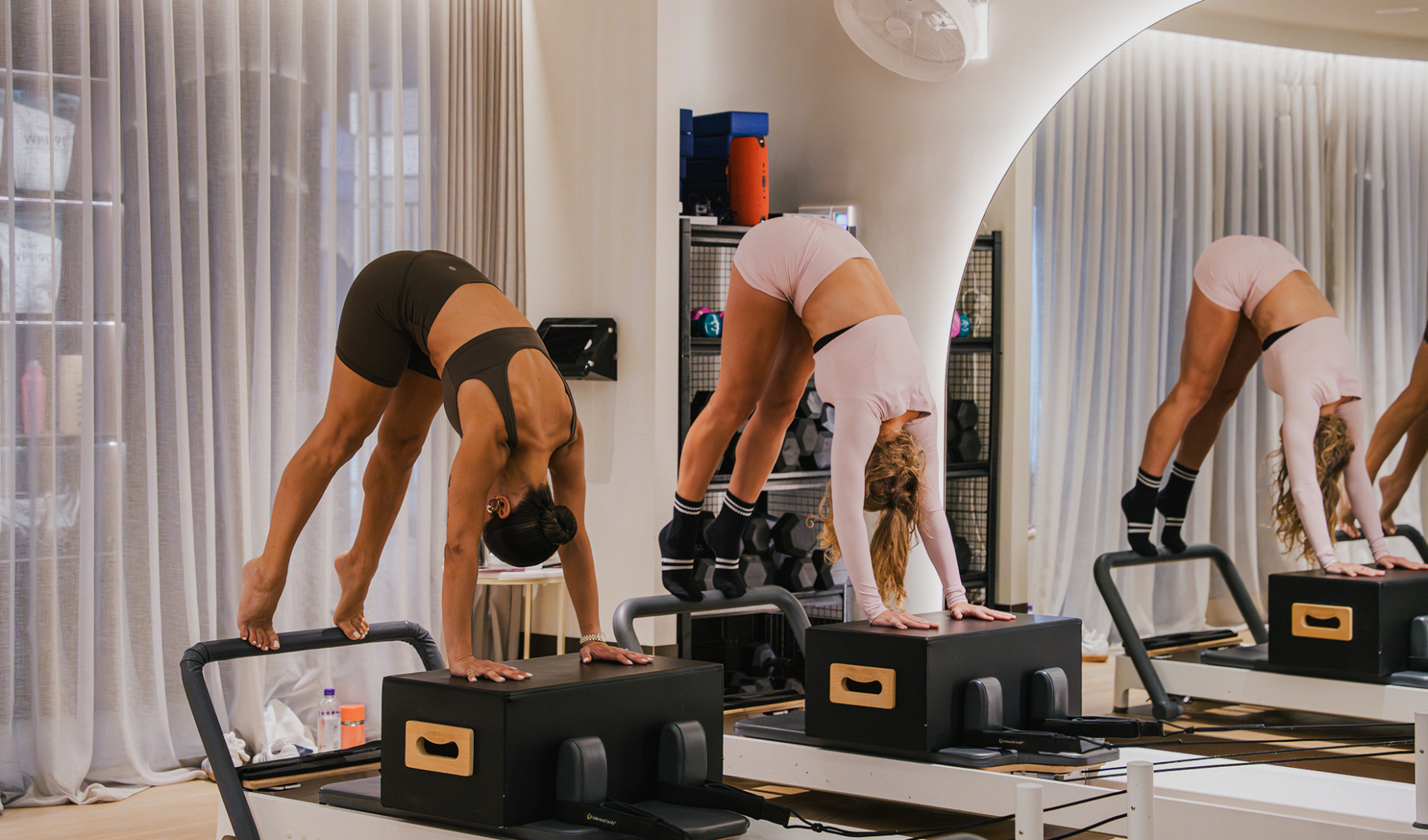
If you’ve been paying attention to the shift happening in Sydney’s CBD fitness scene, you’ve probably noticed it already. The traditional gym is becoming less attractive to people looking for a more effective way to train.
In its place is a more considered approach to training, built around precision, load management, and results that carry over into how your body moves outside the gym.
Reformer Pilates has become the go-to training method for professionals who expect more from their movement practice. At SOMA, we run both Foundations Reformer Pilates and Intermediate Reformer Pilates classes in small group settings at our Aurora Place studio in Sydney CBD.
Members often arrive expecting gentle flexibility work, but quickly realise they’ve stepped into something far more structured, more challenging, and ultimately far more functional.
This blog takes a clear look at what Reformer Pilates can offer, who it works best for, and how it can complement your training routine.
What the Reformer Actually Does to Your Body
The Mechanics Behind the Method
The reformer is a resistance-based machine. A sliding carriage moves along rails and is controlled by a spring system that provides continuous, adjustable tension throughout its motion.
Unlike free weights or fixed-path machines that load the body at specific points, the reformer challenges your muscles across their full range of motion under constant resistance.
This changes how your nervous system engages. Stabilising muscles, especially the deep spinal muscles, the transversus abdominis, and the musculature around the hips, cannot switch off during reformer work.
Every repetition requires sustained control, which is why the work feels simple at first glance but becomes demanding once executed with precision.
Spring Resistance Versus Bodyweight
The discussion around the benefits of mat Pilates vs reformer Pilates comes down to one key factor: external load.
Mat Pilates relies entirely on bodyweight, which demands a high level of intrinsic core activation but limits how much resistance you can apply to the upper and lower limbs.
The reformer introduces variable spring tension, allowing you to load the arms, legs, and glutes in ways that mat work does not replicate, particularly when the goal is to build strength alongside mobility.
A 2017 study in the Journal of Bodywork and Movement Therapies found that people who did Reformer Pilates for 12 weeks became noticeably stronger in their core and shoulder stabilising muscles compared to those who didn’t.
Both formats have clear value. At SOMA, our group reformer classes aim to layer progressive resistance over precise, controlled movement. This is why members who also lift weights, run, or train in other modalities find reformer sessions complementary to their overall training week.
How Reformer Pilates Builds Deep Core Stability
Deep core stability is the body’s ability to support and control the spine using deep stabilising muscles, rather than just the surface abs. It helps improve posture, reduce strain on the lower back, and make movement more controlled and efficient.
It trains the deep core
Core stability comes from deep muscles like the transversus abdominis, pelvic floor, diaphragm, and multifidus. These support the spine and control movement, rather than focusing on visible abdominal muscles.
It creates constant stabilisation
The moving carriage and spring resistance mean there’s no fully fixed position. The body must continuously adjust, keeping the deep core engaged throughout each exercise.
It combines stability with resistance
Reformer Pilates requires you to move your limbs while keeping the spine stable. This builds coordination between breathing, posture, and controlled movement under load.
Reformer Pilates for Posture in Sydney: What CBD Professionals Actually Need
Sydney CBD professionals develop very specific postural patterns from long hours at desks and screens.
Reformer Pilates targets these imbalances directly by strengthening the muscles responsible for spinal alignment and shoulder control under resistance and repetition.
The Postural Strain Created by Desk-Based Work
Long hours of sitting lead to forward head posture, rounded shoulders, and a tilted pelvis. Over time, the body adapts to these positions, so the posture becomes the “default” unless it’s actively trained and corrected.
The Evidence Behind Posture Change
Research shows that doing Pilates twice a week for about three months can improve upper back alignment. Reformer Pilates helps strengthen key postural muscles like the upper back, neck, and spinal stabilisers, which are weakened from sitting too long.
The Exercises That Rebuild Alignment
Exercises like Short Box, Rowing, and Elephant can improve spinal alignment and shoulder control. The springs also act as feedback, making it easier to notice when your posture shifts out of position.
With consistent practice, these improvements carry over into daily life. People tend to sit taller, stand with less effort, and move with better control throughout the day.
Is Reformer Pilates Good for Injury Recovery?
A Rehabilitation Tool That Became Mainstream
The reformer’s adjustable spring tension means it can be set to assist movement rather than resist it, making it suitable for working within pain-free ranges while rebuilding strength around an injury site.
Physiotherapy clinics across Australia use reformer Pilates to rebuild strength and neuromuscular control after lower back injuries, knee reconstructions, shoulder impingements, and hip replacements.
The controlled nature of the training allows practitioners to load injured structures progressively without the jarring forces associated with running, jumping, or heavy compound lifting.
Injury Prevention as the Primary Goal
The reformer promotes even muscle development by targeting the smaller stabilising muscles that a regular gym routine neglects.
Strengthening these muscles improves how the body moves and reduces muscle imbalances that can lead to injuries from repeated strain.
Nathan, one of our trainers at SOMA with fourteen years of experience and a background in competitive rugby and gymnastics, specialises in movement development and injury risk reduction.
His work with members demonstrates consistently that reformer training addresses the gaps left by strength-only programs, particularly around joint stability and single-leg control.
If you are recovering from an injury, discuss it with your trainer before your first class so the appropriate spring tensions and modifications can be applied from the start.
The Role of Reformer Pilates in Strength and Flexibility
There is a common misconception that Reformer Pilates is mainly about flexibility, and that real strength training only comes from lifting heavy weights like a barbell.
This idea misses what the reformer actually does, and also underestimates how effective it is when combined with proper strength programming.
The benefits of reformer Pilates for strength and flexibility come from how spring resistance challenges the muscles in a steady way, while keeping movements full and controlled.
You are building strength under tension, while also improving how far and how well your joints can move at the same time. The carriage and springs keep the muscles working continuously, which creates a different kind of strength stimulus compared to short, heavy gym sets, without the same joint compression.
For SOMA members who also train in our Strength class or with a personal trainer, reformer sessions sit well alongside heavier training. They do not take away from recovery. They support it.
The deep stabilising work helps reinforce compound lifts, while the mobility side carries over into better squat depth, cleaner hip hinge patterns, and more comfortable overhead movement.
How Reformer Training Supports Strength Work
Members who combine reformer Pilates with strength training regularly notice:
- Better movement quality when lifting
- Reduced tension in the lower back
- Stronger stability in single-leg movements like lunges and squats
- Smoother recovery between sessions.
Reformer Pilates Benefits for Women
Strengthening the pelvic floor and deep core as one system
The pelvic floor and deep core work together to support the spine and control movement. Training this system under spring resistance helps improve coordination and strength, which is especially useful during post-pregnancy recovery or pelvic floor issues.
Building strength without high-impact stress on the body
Strength is built through controlled resistance instead of impact, so it’s easier on the joints. This makes it a good option during recovery, hormonal changes, or when the body needs a lower-stress way to train.
Improving posture under the demands of daily work life
Long hours at a desk can place strain on the neck, shoulders, and upper back. This type of training helps rebuild strength in those areas, making it easier to stay upright and supported throughout the day.
Supporting stress reduction and nervous system regulation
Slow, controlled movement combined with breathing helps the body relax and settle. Over time, this can also help reduce overall stress levels and improve how the body responds to tension.
Reformer Pilates: What Studies Show
Effects of an 8-Week Pilates Exercise Program on Spinal Posture and Physical Fitness in Adult Women (Journal of Exercise Rehabilitation)
This study examined the effects of an 8-week Pilates program performed regularly by adult women, with a focus on changes in physical fitness and spinal alignment.
The results showed significant improvements in flexibility and muscular endurance following the 8-week intervention. The study also reported measurable improvements in spinal posture variables, including reduced lateral spinal deviation, suggesting better postural control.
Effects of Pilates on Body Posture: Systematic Review of Randomised and Controlled Trials (Archives of Rehabilitation Research and Clinical Translation)
This systematic review analysed multiple controlled and clinical trials investigating the effects of Pilates on posture, spinal alignment, and related physical outcomes.
Across the included studies, Pilates interventions were performed two to three times per week over periods ranging from 6 to 12 weeks. The review found consistent evidence that Pilates can improve posture, spinal alignment, flexibility, and functional movement capacity.
Improvements in strength were reported in some studies, although results varied depending on the population and program design. Overall, the evidence supports Pilates as an effective method for improving postural stability and movement quality.
Frequently Asked Questions
Can Beginners Start Reformer Pilates Without Any Previous Fitness Experience?
Yes. Reformer Pilates is beginner-friendly and can be adapted to different fitness levels. Beginner classes focus on learning proper technique, body positioning, and movement control before progressing to more challenging exercises.
How Often Should You Do Reformer Pilates?
The answer depends on your experience, activity level, and goals.
- Beginners: 2 sessions per week to build technique and strength.
- Active individuals: Around 3 sessions per week to support consistent training and recovery.
- Rehab or posture-focused goals: 1 to 3 sessions per week with guided progression.
Consistency matters more than volume. What you do regularly each week will always matter more than occasional high effort.
How Long Does It Take to Notice Results From Reformer Pilates?
Most people notice small changes in flexibility and posture within 2 to 4 weeks of consistent training. Strength, stability, and endurance improvements become more noticeable after around 6 to 8 weeks, especially with regular sessions each week.
Can Reformer Pilates Help Improve Sports Performance and Athletic Training?
Yes. Reformer Pilates helps improve core strength, mobility, balance, and movement control. These benefits can support athletic performance and reduce the risk of training-related injuries.
Is Reformer Pilates Suitable for Older Adults Looking to Maintain Strength and Mobility?
Yes. Reformer Pilates provides low-impact resistance training that supports strength, balance, flexibility, and mobility. Exercises can be adjusted to suit individual abilities and fitness levels.
Conclusion
The benefits of reformer Pilates extend far beyond flexibility. From building deep core stability and improving posture to supporting strength development, injury prevention, and long-term movement quality, it offers a complete approach to training that fits modern lifestyles.
With consistent practice, the improvements gained in the studio will carry into your overall physical well-being.
If you are ready to experience the benefits for yourself, try SOMA’s Reformer Pilates classes in Sydney CBD. Our small-group sessions are structured to help you build strength and improve movement quality in a supportive training environment. View the timetable and find a class that fits your schedule today.
Read more
Functional Strength Training Explained: Why It Matters More Than How Much You Lift
Walk into most gyms, and you’ll see people working hard to get stronger. Someone is bench pressing, someone is trying to lift…
The Real Importance of Exercise in Winter: What Happens to Your Body When You Stop Moving
Sydney’s winters are relatively mild, yet they still have a way of disrupting healthy routines. Cold mornings can bring temperatures down into…
Why Winter Is Actually the Best Time to Build Muscle in Australia
Winter in Sydney brings a familiar routine. The alarm goes off, the temperature drops below 15 degrees, and the same internal negotiation…
Common Gym Injuries and How to Avoid Them (Trainer-Approved Tips)
Strength training has become one of the most popular ways Australians improve their fitness, strength, and confidence. More people are training regularly,…
