What Your Bloodwork Actually Tells You About Your Fitness (And What It Doesn’t)
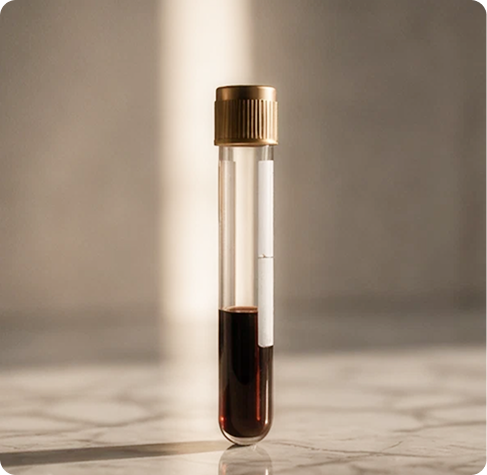
Blood tests for fitness: the markers behind your training, recovery and long-term health
Your last blood test came back normal. Good news. But normal was never really the question.
If you train four days a week, track your sleep and still have weeks where everything feels flat, a clean result from your GP doesn’t tell you much. It tells you nothing is obviously wrong. It doesn’t tell you what’s holding you back.
That’s where most people stop reading their bloodwork. It’s also where the useful part starts.
The short version: A standard GP blood panel checks for disease, not performance. The biomarkers that shape fitness, recovery and longevity rarely appear on a routine request form. Here’s what to test, what the results can and can’t tell you, and how often to check.
What does a standard blood test actually check?
A routine GP panel looks for signs of illness. It usually covers a full blood count, cholesterol and lipids, fasting glucose, and kidney and liver function, with thyroid and iron studies added depending on your history and symptoms.
That’s exactly what it should do. These tests pick up anaemia, infection, early diabetes and thyroid problems, and they catch a lot of serious conditions early.
The catch is in how results are read. Each marker is compared against a reference range drawn from the general population. Land inside it and you’re marked normal. But a range built to flag disease has to be wide, and sitting at the low edge of normal can still mean you’re running on less than you think.
Some markers never make the form at all. Since 2014, Medicare has only rebated vitamin D testing for specific risk groups, so plenty of active, healthy adults never have it checked. Fasting insulin, cortisol and DHEA tend to appear only when there’s a clinical reason to look.
Which biomarkers actually matter for fitness and recovery?
The markers worth watching show how your body is handling the load you put on it. They fall into five groups.
- Inflammation: CRP and homocysteine. Training triggers short bursts of inflammation, and that’s part of how you adapt. High-sensitivity CRP shows whether it settles between sessions or lingers in the background. Homocysteine links to heart health and B-vitamin status.
- Hormones: testosterone, cortisol and DHEA. These shape how you build muscle, recover and cope with stress. Cortisol climbs with hard training, short sleep and a demanding job, and your body barely tells the three apart. Testosterone and DHEA influence repair, energy and drive in women as well as men.
- Metabolic health: insulin and HbA1c. HbA1c reflects your average blood sugar over the past two to three months. Fasting insulin shows how hard your body works to keep it there. Plenty of fit people post a normal glucose reading while insulin quietly creeps up.
- Micronutrients: vitamin D, magnesium and ferritin. Ferritin is your iron reserve. When it runs low, endurance and energy drop, often well before you’d be called anaemic. Vitamin D supports muscle and bone. Magnesium plays a part in muscle contraction, sleep and energy, and heavy sweating drains it.
- Epigenetic age. This one reads chemical tags on your DNA to estimate your biological age. It reflects the sum of your habits rather than a single system.
No single marker tells the full story. The value is in how they read together.
What can bloodwork tell you that your wearable can’t?
Your wearable measures what your body does. Bloodwork shows what it’s working with.
An Oura Ring, Apple Watch or Whoop is excellent at tracking output: sleep stages, resting heart rate, HRV, steps and strain. Watched over weeks, those trends say a lot. But they’re signals, not explanations.
Say your HRV has slid for a fortnight and your sleep scores are down. Your device flags the pattern. It can’t tell you whether the cause is low ferritin, cortisol that won’t settle, a winter dip in vitamin D or simply a brutal month at work. Each calls for a different fix.
Most people already have plenty of data. It just lives in separate places: the wearable in one app, the last blood test in a PDF from the GP, the training log somewhere else. Read side by side, they start to explain each other. That’s the case for connecting your health picture instead of collecting more of it.
How often should you get your bloodwork done if you exercise regularly?
For most people who train regularly, twice a year is the right rhythm for comprehensive bloodwork.
Once a year is too far apart. By the time you retest, you’ve changed your training, diet, sleep and supplements several times over, and there’s no telling what moved the needle. Monthly testing swings too far the other way. Many markers take weeks or months to shift, so you end up reading noise.
Six months gives a change time to show in the numbers. It also builds a trend instead of a snapshot, and lines up with the seasons. A winter and a summer test will show how your vitamin D and recovery markers respond to shorter days and a different training load. It’s the cadence SOMA Longevity is built around.
If you’re managing something specific, like persistent fatigue or low iron, your doctor may want to recheck certain markers sooner. Follow their lead.
What’s the difference between testing for disease and testing for performance?
Testing for disease asks one question: is something wrong? Testing for performance asks another: how well is everything working, and where is there room to improve?
Both matter. They just need different tools.
A GP panel is built for the first question, and it answers it well. It’s targeted, evidence-led and designed to catch problems early. Your GP remains the right person for diagnosis, treatment and anything that feels off.
Performance testing casts a wider net and reads results differently. Rather than asking whether a marker sits inside the reference range, it asks where you sit within it, how that’s changed since last time, and how it relates to everything else on the report. Ferritin can be technically normal and still low for someone running 40 kilometres a week.
Two lenses, one body. One guards against what could go wrong. The other helps you get more from what’s going right.
How does SOMA Longevity use your bloodwork?
SOMA Longevity starts with a 75-biomarker blood panel, alongside DNA testing and epigenetic age analysis. It covers the inflammation, hormonal, metabolic and micronutrient markers above, and a good deal more.
Your results go to Your Tomorrow, SOMA’s partner team of longevity doctors and naturopaths. They review your bloodwork and take you through it in a one-on-one consultation: what stands out, what’s working and where the opportunities sit.
From there, you get a personalised protocol. Depending on your results, that could mean targeted supplementation, changes to how you train, or recovery work like red light therapy, hyperbaric oxygen, sauna and cold plunge. Your bloodwork sits next to your Oura Ring data, so the two get read together.
Then you retest. Every six months, the full panel runs again, and your protocol shifts based on what has actually changed. Over time, that builds a record of how your body responds, which beats any single result. It also ends the cycle of fragmented health advice: one team, one plan, one set of data.
If you’ve ever walked out of a results appointment unsure what happens next, our piece on knowing what to do with your data picks up that thread.
Frequently asked questions
What blood tests should I get as a fitness-focused person?
Beyond a standard panel, look at inflammation (hs-CRP, homocysteine), hormones (testosterone, cortisol, DHEA), metabolic markers (fasting insulin, HbA1c) and micronutrients (vitamin D, magnesium, ferritin). Together they show how well you recover and adapt, not just whether you’re unwell.
Can bloodwork tell you if you’re overtraining?
No single test diagnoses overtraining, but bloodwork can point to it. Persistently raised CRP, a shift in the cortisol-to-testosterone balance, and falling ferritin are common warning signs, especially alongside a dropping HRV. A pattern across repeat tests says more than one result.
What is a longevity blood panel?
It’s a broad set of biomarkers chosen to show how well your body is ageing, rather than only screening for disease. It typically spans inflammation, metabolic health, hormones, micronutrients and cardiovascular risk, and it’s repeated over time to track change.
How is a 75-biomarker test different from a standard blood test?
A standard GP panel targets a smaller set of markers to detect or rule out disease. A 75-biomarker panel covers far more ground, including markers rarely ordered routinely, and reads results for trends as well as red flags. It works alongside your GP, not in place of them.
Where can I get a comprehensive blood test for fitness in Sydney?
SOMA Longevity at SOMA Collection, Aurora Place in the Sydney CBD, includes a 75-biomarker panel twice a year, reviewed with Your Tomorrow’s longevity doctors and built into a personalised protocol. The program is taking Founding Waitlist registrations now.
See what’s beneath the surface
Your training already asks a lot of your body. It makes sense to know what it’s working with.
SOMA Longevity will open with a capped number of Founding Memberships. Join the Founding Waitlist to hear first when applications open and to find out what your bloodwork has been trying to tell you.
Read more
Longevity in Sydney: Why Our Co-Founder Tested It First
Longevity is everywhere in Sydney right now. Every week brings a new supplement, a new device, a new protocol someone swears by.…
Gym with Sauna in Sydney: The Smartest Way to Train and Recover in the One Place
Looking for a gym with sauna in Sydney? Soma Collection offers premium training and infrared sauna recovery under one membership in the…

Why Reformer Pilates is Sydney’s Most In-Demand Workout (And Where to Try It in the CBD)
Discover why reformer pilates is Sydney's fastest-growing workout. Book a class at Soma Collection in the CBD and experience the difference.

One Body. One Story. Why SOMA Longevity Connects Your Health
You probably know more about your body than you did five years ago. Your watch knows how you slept last night. Your…
